How AI is changing digital marketing and the future of search

Author: Tom Hart
Managing Director


One thing to make clear at the start of this blog, despite all my temptations, no AI was used to create this. It was written the old-fashioned way and took hours rather than seconds.
This leads us straight into the first thing that AI is going to change in Digital Marketing, and that is time. AI is going to give us all back time.
This has been happening for a while now without being talked about. Those of us who remember using Google Ads when manual bidding was the only option, or before marketing platforms suggested copy, know how much quicker campaign setup and optimisation are now. Doesn’t mean it is easier, but it is faster.
Added to that are all the prompts, reporting templates, scheduling tasks, and workflow tools that are now available; there is more time to spend on what really matters for clients, which is strategy. Understanding your user journey, pain points, conversion rates, bid strategies, and more is what will make or break campaign success. AI can give you much more time to focus on these aspects.
The more interesting side and the area that everybody is rushing to write blogs (guilty), release podcasts, and create endless LinkedIn posts on is how AI-influenced search results will impact how businesses reach customers.
By now, everybody will have seen, and almost certainly used (maybe without even realising), the AI overview that Google started showing in search results at the start of the year. Initially, it appeared in relatively few searches, but the frequency of its appearance has increased dramatically recently. Interestingly, when these AI Overviews were first introduced, they appeared above the paid ads, but they are now shown below the paid results. If you were to be cynical, and I am, you could conclude that Google discovered putting the AI Overview above paid ads meant fewer clicks on paid ads and a drop in their earnings.
One thing I think we can be confident about is that Google isn’t about to change things in a way that harms revenue numbers. Any Paid Marketing specialist can probably rest easy that Google is going to prioritise paid results.
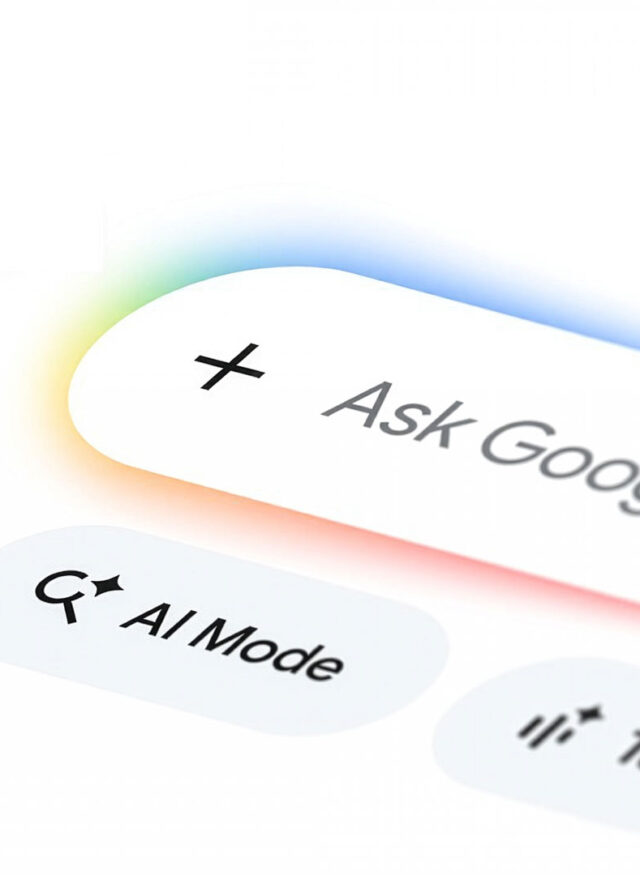
Even more recent is the introduction of AI mode, which appears to be Google’s answer to ChatGPT. Currently, this is an option that you must click to view the AI Mode results, although it is being introduced on mobile searches with a prompt to ask if you want to try AI mode. I think we can safely assume that this will become the default search option in the near future (once they have worked out how to integrate the paid ads).
Both AI Overviews and AI Mode retrieve results from multiple sources to compile answers for the searcher.
For marketers and business owners, it is crucial to understand that your website is no longer the sole source of truth. SEO used to mean optimising a website to ensure that Google ranked it favourably when somebody used a search term that you wanted to show up for. SEO now means optimising a website, multiple social media platforms, possibly a review platform, and numerous brand mentions. This is a good thing; there are various ways for AI to pull information about a business, but it also means there needs to be consistency across multiple sources. If businesses list different services, prices, and USPs across the internet, how is AI supposed to know which one is correct?
As clever as people want to believe AI is, it is merely collecting and collating information; therefore, it is up to us to ensure that the information it can collect is accurate. Search results will become much more conversational over time, and AI versions of search results are likely to offer to do some steps for you. “I see you have searched for Invisalign, shall I book you an appointment at a local dental practice?”. Rather than requiring the user to do all the work, the AI will handle bookings, purchases, and leaving reviews, among other tasks.
There are many more things that could be listed that will change as the use of AI becomes more widespread within digital marketing. Who knows how Google, ChatGPT, Microsoft and all the various AI platforms see this going, but some things will remain true.
These platforms are designed to generate revenue, so they will always offer some form of paid advertising.
However, in the coming years, SEO will still enable you to optimise your information, ensuring you appear ahead of the competition.
And finally, marketers need to focus on the user. The journey might change, and the way to reach them might change, but understanding the needs of users and how to ensure that your site or business provides the right solution at the right time will always be key to digital marketing.